Video Vision Transformer (ViViT)
Four different architectures of video transformers are proposed in here based on four different factorization techniques of spatiotemporal features. In the first variation (Spatiotemporal attention), the transformer encoder accepts different spatiotemporal portions of the video, performing joint space-time attention without factorization. In the second variation (Factorized encoder), a spatial transformer is applied first for all frames in a video, and then a temporal transformer deals with the learned encoding of each spatial transformer. In the third variation (Factorized self-attention), a similar approach to the first variation is applied but with factorization into spatial attention and temporal attention. In the final variation (Factorized dot-product attention), the factorization is applied to the multi-head dot-product attention operation. The first variation has the highest inference cost and achieves the best results on the Kinetics-400 dataset. On the other hand, the second variation has the minimal inference cost compared to the other variations, with a slight decrease in accuracy compared to the first variation.
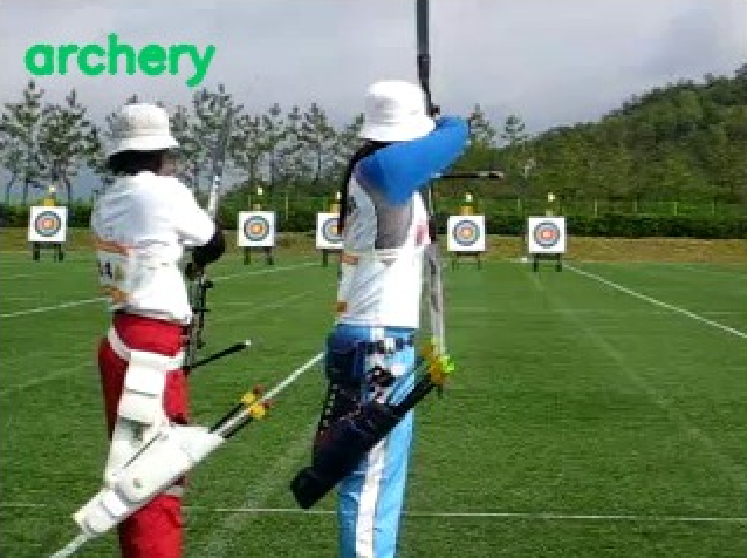
Example
from dronevis.models import ActionRecognizer

model = ActionRecognizer()
model.load_model("google")
model.detect_webcam()