Video Masked Autoencoders (VideoMAE)
A tube masking strategy is proposed in here to force the network to learn important features in a video. This is achieved by masking a large portion of cubes in the video (where cube embedding is used to represent one token) with negligible motion, reducing the computation cost and enhancing the model performance. The few remaining unmasked tokens are used with the vanilla Vision Transformer (ViT) to capture the spatiotemporal relation between them. This approach achieved state-of-the-art results on the Kinetics-400 dataset with 87.4% accuracy, compared to 80.7% and 84.9% accuracy of TimeSformer and ViViT, respectively. In terms of inference cost, VideoMAE requires 7397 GFLOPS, while TimeSformer and ViViT require 8353 and 3981 GFLOPS, respectively.
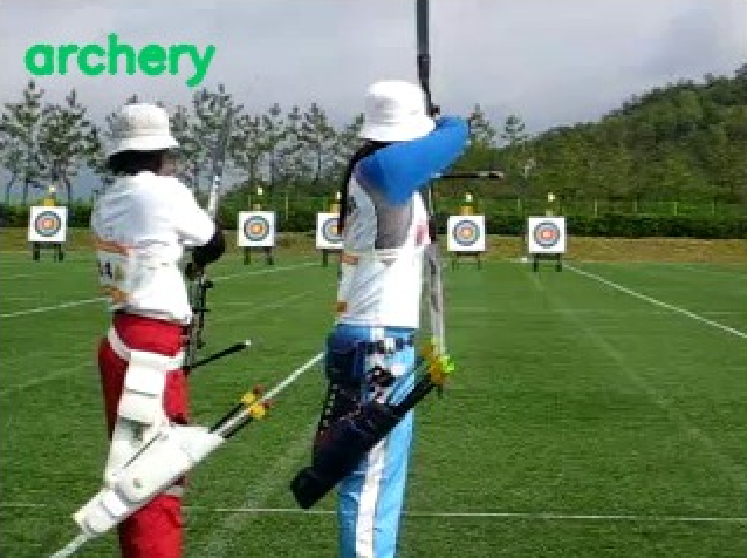
Example
from dronevis.models import ActionRecognizer

model = ActionRecognizer()
model.load_model("mcg")
model.detect_webcam()